Guides
Roofing contractor equipment brands worth trusting for 2027
Named roofing equipment brands worth trusting in 2027, what each manufacturer is known for, and the checks that separate a good tool from a good dealer.
What to take away
- The roofing contractor equipment brands below earn a spot for two reasons: parts reach a job site within a day, and the repair network is real.
- CompressorsEmglo and RolAir. Coil nailers: Bostitch, Metabo HPT and Senco.
- Cordless shearsMakita and DeWalt.
- Material handlingReimann, Irion, ClearSpan and Genie.
- Fall protectionGuardian, Malta Dynamics and 3M DBI-SALA.
- Brand matters less than the dealer. A good tool with no local parts is a paperweight by Thursday.
- Compressors, nailers, shingle cutters and conveyors are the four lines where brand choice costs or saves the most.
- Rent the leader for one real job before you commit a truck to it.
- Safety gear is not a value comparison. Your written program specifies it, and the firm replaces it on its own authority.
The brands, and why each is here
Compressors and pneumatic tools. Emglo and RolAir both build wheeled compressors that roofing crews run hard, and both keep consumable parts on dealer shelves rather than on backorder.
RolAir's cast-iron pump line is the one crews mention for running three nailers at once. Emglo's smaller tanks suit two-person tear-off crews who move the unit by hand. As of 2026, street prices typically run $900 to $1,600 for a wheeled electric unit, and past $2,000 for gas models with larger tanks.
Coil nailers. Bostitch and Metabo HPT, formerly Hitachi, hold most of the roofing nailer market. The reason is mechanical: the coil magazines feed at the angle shingle work demands, and both makers publish a service schedule instead of hiding it. Senco sits alongside them for crews who already run Senco fasteners.
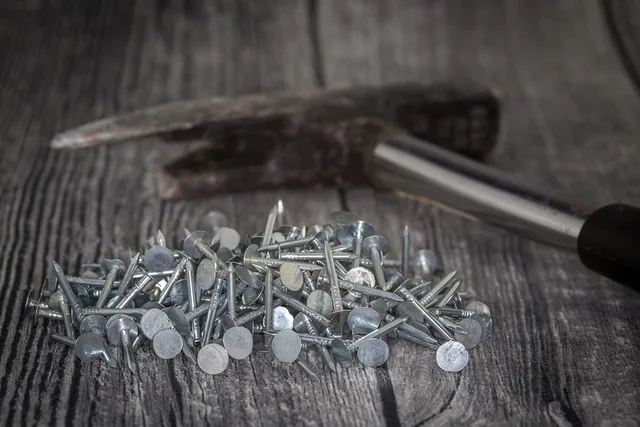
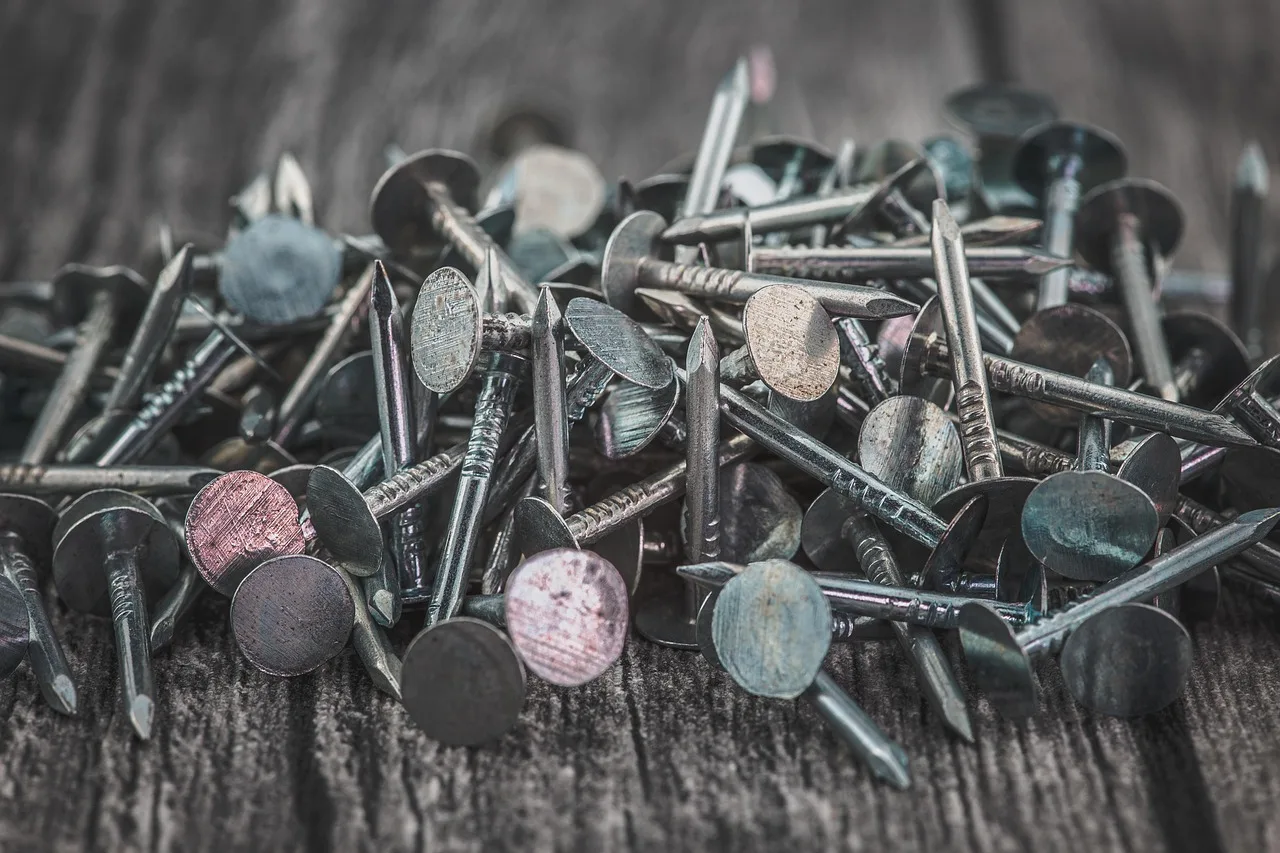
Coil roofing nails come in 15-degree and 16-degree wire-weld collations, and a magazine takes one of those angles plus a nail length range, usually 7/8 inch to 1-3/4 inch. A full coil holds roughly 120 nails. Professional coil nailers typically sell for $300 to $500 new.
Shingle cutters and shears. Makita and DeWalt both make cordless shears that cut laminated shingles without tearing the mat. Makita's 18V LXT platform shares batteries across more than 200 tools, which matters more than any spec sheet when a crew already carries that platform.
DeWalt's 20V MAX packs do the same inside its own line. A bare shear typically runs $200 to $350, and a 5.0Ah 18V battery about $90 to $130.
Conveyors and material handling. Reimann and Irion both build roof-loading conveyors used across North American crews. ClearSpan and Genie cover the ladder-lift and material-hoist side.
A Genie Superlift Contractor lift reaches about 24 ft and carries roughly 650 lb, typically $3,000 to $5,000 new. These are capital purchases, so the resale market matters as much as the new price.
Fall protection. Guardian, Malta Dynamics and 3M DBI-SALA all publish the inspection schedules and load ratings a written program needs. Which one you buy is decided by your program, not by this list.
Guardian works out of Kent, Washington, and Malta Dynamics out of Malta, Ohio. Both sell direct or through safety distributors. 3M bought Capital Safety, DBI-SALA's parent, in 2015, so its harnesses come through 3M's channel. A full-body harness typically runs $100 to $300, a self-retracting lifeline $200 to $500.
What to check before you buy any of them
What to check before you buy
- Call a dealer within an hour of the job and ask for a consumable part for that exact model. On a shelf or on order?
- Ask the service department, not the sales desk, for the warranty repair turnaround and whether a loan unit is available.
- Ask a working crew from another firm what broke and how long the fix took.
- Confirm the manual is published and readable. A maker that hides the manual hides the service schedule too.
- Check how long the model has been in production. A first-year model has no parts market yet.
Fit with what you already run
Standardizing on one battery platform, one fastener gauge and one coil angle saves more time than any single tool upgrade. A crew that carries two battery systems carries two chargers, two spare sets and two failure modes.
Ask what happens to the day if the unit fails at nine in the morning. If the answer is send everyone home, buy two or buy something else.
Safety gear is judged differently
Anything that protects a person is specified by your written program, inspected on a schedule, and pulled from service on the firm's authority rather than the user's.
The OSHA guidance on fall protection in residential construction describes the methods available and places the duty to apply the applicable requirements on the employer. Federal rules in 29 CFR 1926.501(b)(13) set the residential trigger at 6 feet.
The OSHA safety and health programs material sets out how a small employer runs the program around it. Decide the specification with a qualified safety adviser, then buy only what meets it.
One condition that changes the list
Where work disturbs painted surfaces on older housing, lead-safe work practices can apply and change what containment and cleanup equipment you need, along with who is permitted to run the job. The EPA renovation, repair and painting program page for contractors sets out the program and its scope.
The rule covers target housing built before 1978. Firm certification is required, and a certified renovator must be assigned to the job after an eight-hour initial course. Settle this before you build a kit list for older neighborhoods.
What to do with the list
Score three candidates against five checks you actually care about, in writing, before anyone talks to a salesperson. Then rent the leader for a job.
Slot the winner into the tiered buying order in the roofing contractor equipment checklist for new owners. Decide new against used with the arithmetic in the new versus used roofing contractor equipment cost guide, and check it against the capacity view in the roofing contractor equipment and setup guide.
Whether the local market supports the job type the tool serves is a separate question, answered in best markets for a roofing contractor business. Training somebody to run it belongs in the progression described in the roofing contractor hiring and training guide.
Common questions
Does brand matter at all?
It matters as a proxy for parts availability and service, which are what actually affect you. Judge those directly and the brand question mostly answers itself.
Should the whole fleet be one brand?
Standardizing on batteries, fasteners and consumables saves real time. Standardizing on everything for its own sake is how firms pay more for a weaker tool.
How do I compare two tools honestly?
Same job, same crew, same week, written notes at the end of each day. Anything less is a memory contest.
What if a crew prefers a tool that scores badly?
Find out why. Usually they are telling you about weight, balance or a failure you have not seen yet, and the score is missing something real.